


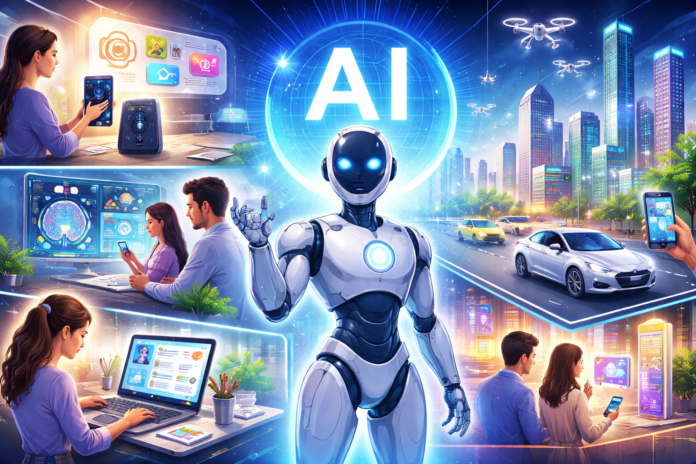
Artificial Intelligence (AI) has rapidly evolved from a futuristic concept into a powerful force shaping modern society. What once seemed like a distant technological dream is now deeply embedded in our daily routines, influencing how we communicate, learn, shop, work, and even make decisions. As AI continues to advance, its role in everyday life is expected to expand dramatically, bringing both exciting opportunities and important challenges.
This article explores the impact of AI across different sectors, its benefits, concerns, and what the future may hold for humanity in an increasingly automated world.
Understanding Artificial Intelligence
Artificial Intelligence refers to the development of computer systems capable of performing tasks that typically require human intelligence. These tasks include problem-solving, language understanding, pattern recognition, and decision-making. AI systems are powered by algorithms and vast amounts of data, allowing them to learn from experience and improve over time.
There are different types of AI, including:
- Narrow AI: Designed for specific tasks, such as voice assistants or recommendation systems.
- General AI: A more advanced concept where machines can perform any intellectual task that a human can do.
- Machine Learning: A subset of AI that enables systems to learn from data without explicit programming.
Most AI applications today fall under narrow AI, but research continues to push toward more advanced systems.
AI in Everyday Life
AI is already a part of everyday life for billions of people, often in ways that go unnoticed. It enhances convenience, saves time, and improves user experiences.
Smart Assistants and Automation
Virtual assistants like Siri, Alexa, and Google Assistant help users perform tasks through voice commands. They can set reminders, answer questions, control smart home devices, and even manage schedules. These tools rely on natural language processing, a branch of AI that enables machines to understand and respond to human language.
Personalized Recommendations
AI algorithms analyze user behavior to provide personalized content. Whether it’s recommending movies on streaming platforms, suggesting products in online stores, or curating social media feeds, AI ensures that users receive content tailored to their preferences.
Transportation and Navigation
Navigation apps use AI to analyze traffic patterns and suggest the fastest routes. Ride-sharing platforms optimize driver allocation and pricing. In the future, autonomous vehicles are expected to revolutionize transportation by reducing accidents and improving efficiency.
Communication and Social Media
AI plays a significant role in filtering spam emails, detecting harmful content, and enhancing user interactions on social media platforms. Chatbots provide instant customer support, improving response times and customer satisfaction.
AI in Education
Education is undergoing a transformation thanks to AI technologies. Traditional learning methods are being enhanced with intelligent systems that personalize education and improve outcomes.
Personalized Learning
AI can adapt educational content based on a student’s strengths and weaknesses. This ensures that learners receive customized lessons that match their pace and understanding level. Students who struggle with certain topics can receive additional support, while advanced learners can move ahead more quickly.
Automated Assessment
AI-powered tools can grade assignments, quizzes, and exams, saving time for educators. These systems provide instant feedback, helping students identify areas for improvement.
Virtual Classrooms
Online learning platforms use AI to enhance virtual classrooms by tracking student engagement and performance. AI can recommend courses, suggest study materials, and even predict academic success.
Benefits for Teachers
AI reduces administrative workload by automating tasks such as attendance tracking, grading, and scheduling. This allows teachers to focus more on teaching and interacting with students.
AI in Healthcare
Healthcare is one of the most promising fields for AI applications. AI is improving diagnosis, treatment, and patient care in ways that were previously unimaginable.
Early Diagnosis and Detection
AI systems can analyze medical data, including images and patient records, to detect diseases at an early stage. For example, AI can identify patterns in X-rays or MRIs that may indicate conditions such as cancer or heart disease.
Personalized Treatment
AI helps doctors develop personalized treatment plans based on a patient’s medical history, genetics, and lifestyle. This leads to more effective and targeted treatments.
Drug Discovery
Developing new drugs is a time-consuming and expensive process. AI accelerates this process by analyzing chemical compounds and predicting their effectiveness, significantly reducing research time.
Remote Healthcare
AI-powered applications enable remote monitoring of patients through wearable devices. These systems can track vital signs and alert doctors if any abnormalities are detected.
AI in Business and Industry
Businesses across all sectors are leveraging AI to improve efficiency, reduce costs, and gain a competitive edge.
Customer Service
AI chatbots and virtual assistants provide 24/7 customer support. They can handle common queries, process orders, and resolve issues quickly.
Data Analysis
AI can analyze large volumes of data to identify trends and insights. This helps businesses make informed decisions and improve strategies.
Automation
AI automates repetitive tasks such as data entry, inventory management, and quality control. This increases productivity and allows employees to focus on more complex tasks.
Marketing and Sales
AI helps businesses target the right audience by analyzing consumer behavior. It enables personalized marketing campaigns, improving engagement and conversion rates.
Benefits of Artificial Intelligence
AI offers numerous advantages that contribute to its growing adoption:
Increased Efficiency
AI systems can perform tasks faster and more accurately than humans, leading to improved productivity.
Cost Reduction
Automation reduces the need for manual labor, lowering operational costs for businesses.
Improved Accuracy
AI minimizes human errors, especially in tasks that require precision, such as medical diagnosis or data analysis.
Innovation and Growth
AI drives innovation by enabling new technologies and solutions, opening up opportunities across various industries.
Challenges and Ethical Concerns
Despite its many benefits, AI also presents significant challenges that must be addressed.
Job Displacement
Automation may replace certain jobs, particularly those involving repetitive tasks. While AI creates new opportunities, it also requires workers to adapt and acquire new skills.
Privacy and Security
AI systems rely on large amounts of data, raising concerns about data privacy and security. Unauthorized access or misuse of data can have serious consequences.
Bias and Fairness
AI systems can inherit biases from the data they are trained on. This can lead to unfair or discriminatory outcomes, especially in areas like hiring or law enforcement.
Dependence on Technology
Overreliance on AI may reduce human decision-making skills and increase vulnerability to system failures.
The Future of Artificial Intelligence
The future of AI is both exciting and uncertain. As technology continues to evolve, AI is expected to become more advanced and integrated into daily life.
Smart Cities
AI will play a key role in developing smart cities, where infrastructure, transportation, and public services are optimized using data and automation.
Autonomous Systems
Self-driving cars, drones, and robotic systems will become more common, transforming industries such as transportation, logistics, and manufacturing.
Human-AI Collaboration
Rather than replacing humans, AI is likely to work alongside people, enhancing their abilities and improving productivity.
Ethical AI Development
As AI becomes more powerful, there will be a greater focus on ethical development and regulation. Governments and organizations will need to establish guidelines to ensure responsible use.
Preparing for an AI-Driven Future
To thrive in an AI-driven world, individuals and organizations must adapt to changing technologies.
Education and Skill Development
Learning new skills, particularly in technology and data analysis, will be essential. Continuous education and training will help individuals remain competitive in the job market.
Embracing Change
Adapting to new technologies and embracing innovation will be key to success. Those who resist change may struggle in an evolving landscape.
Collaboration and Responsibility
Developers, businesses, and policymakers must work together to ensure that AI is used ethically and benefits society as a whole.
Conclusion
Artificial Intelligence is transforming every aspect of modern life, from education and healthcare to business and communication. Its ability to enhance efficiency, improve accuracy, and drive innovation makes it one of the most powerful technologies of our time.
However, with great power comes great responsibility. Addressing challenges such as job displacement, privacy concerns, and ethical issues is crucial to ensuring that AI benefits everyone.
As we move forward, the integration of AI into everyday life will continue to grow. By understanding its potential and preparing for its impact, we can create a future where technology and humanity coexist in harmony, leading to a smarter, more efficient, and more connected world.

