


Introduction
In just over a decade, social media has transformed from a niche online activity into a central part of everyday life. Platforms like Facebook, Instagram, TikTok, and Twitter (now X) are no longer just tools for communication—they are powerful ecosystems that influence how people think, feel, and behave. With billions of users worldwide, social media has become a psychological environment where identity, relationships, and even self-worth are continuously shaped and reshaped.
While social media offers undeniable benefits—such as global connectivity, information sharing, and entertainment—it also raises important questions about its psychological impact. Why do people feel addicted to scrolling? Why does online validation matter so much? And how does constant exposure to curated content affect mental health?
This article explores the psychology behind social media use, its effects on human behavior, and strategies for maintaining a healthy digital life.
The Science Behind Social Media Addiction
One of the most discussed aspects of social media is its addictive nature. Many users find themselves checking their phones repeatedly, often without conscious intention. This behavior is not accidental—it is deeply rooted in psychological principles.
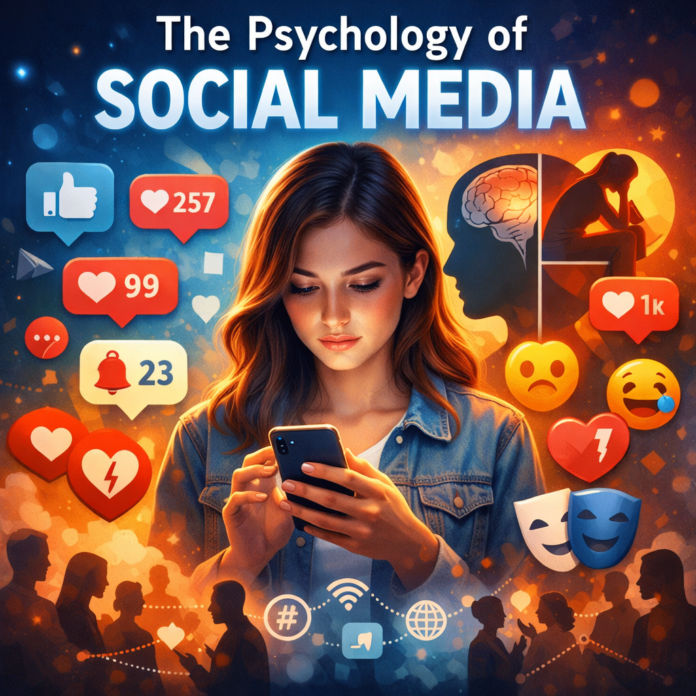
Social media platforms are designed to trigger the brain’s reward system. When users receive likes, comments, or shares, the brain releases dopamine, a neurotransmitter associated with pleasure and reward. This creates a feedback loop: users post content, receive validation, and feel motivated to repeat the behavior.
This mechanism is similar to other forms of addiction, such as gambling. The unpredictability of rewards—sometimes a post gets many likes, sometimes it doesn’t—makes the experience even more compelling. This is known as a “variable reward schedule,” a powerful psychological trigger.
The Role of Validation and Self-Esteem
Social media has redefined how people seek validation. In the past, self-esteem was largely influenced by personal relationships and real-world achievements. Today, it is increasingly tied to online metrics such as likes, followers, and comments.
For many users, especially young people, these metrics become indicators of self-worth. A post that performs well can boost confidence, while a lack of engagement can lead to feelings of rejection or inadequacy.
This constant comparison can be harmful. Users often compare their real lives to the highlight reels of others, leading to unrealistic expectations and dissatisfaction. Over time, this can negatively impact self-esteem and mental well-being.
The Illusion of Connection
Social media gives the impression of constant connectivity. People can communicate instantly with friends, family, and even strangers across the globe. However, this digital connection does not always translate into meaningful relationships.
Many users experience a paradox: they are more connected than ever, yet feel increasingly lonely. This is because online interactions often lack the depth and emotional richness of face-to-face communication.
Superficial engagement—such as liking a post or sending a quick message—cannot fully replace genuine human connection. As a result, excessive social media use can contribute to feelings of isolation and loneliness.
The Impact on Mental Health
The relationship between social media and mental health is complex. While these platforms can provide support and community, they can also contribute to anxiety, depression, and stress.
Anxiety and Fear of Missing Out (FOMO)
Social media constantly exposes users to what others are doing, creating a fear of missing out. Seeing friends travel, attend events, or achieve milestones can lead to feelings of exclusion and anxiety.
Depression and Comparison
Constant comparison with others can lead to negative self-perception. When users feel that their lives do not measure up, it can result in sadness and even depression.
Sleep Disruption
Excessive use of social media, especially before bedtime, can interfere with sleep patterns. The blue light emitted by screens and the mental stimulation from scrolling can make it difficult to fall asleep.
The Influence on Identity and Behavior
Social media plays a significant role in shaping identity, particularly among adolescents and young adults.
Curated Identities
Users often present idealized versions of themselves online. They carefully select photos, edit content, and share only the most positive aspects of their lives. Over time, this can create a disconnect between online identity and real-life self.
Peer Influence
Social media amplifies peer pressure. Trends, challenges, and viral content can influence behavior, sometimes encouraging risky or harmful actions.
Echo Chambers
Algorithms on social media platforms show users content that aligns with their existing beliefs. This creates “echo chambers,” where individuals are exposed only to similar viewpoints, reinforcing biases and limiting critical thinking.
The Business of Attention
Social media platforms are not just communication tools—they are businesses. Their primary goal is to capture and retain user attention, as this drives advertising revenue.
To achieve this, platforms use sophisticated algorithms that personalize content based on user behavior. The more time users spend on the platform, the more data is collected, and the more targeted the advertisements become.
This business model raises ethical concerns. By prioritizing engagement, platforms may promote content that is sensational, emotionally charged, or even misleading, as such content tends to attract more attention.
Positive Effects of Social Media
Despite its challenges, social media also offers many benefits when used responsibly.
Global Connectivity
Social media connects people across geographical boundaries, enabling communication and collaboration on a global scale.
Access to Information
Users can access news, educational content, and diverse perspectives instantly, making social media a powerful learning tool.
Support Communities
Online communities provide support for individuals facing similar challenges, such as mental health issues, chronic illnesses, or personal struggles.
Creative Expression
Social media allows users to share their creativity through art, writing, music, and other forms of expression.
Strategies for Healthy Social Media Use
Maintaining a healthy relationship with social media requires awareness and intentionality. Here are some practical strategies:
Set Time Limits
Limiting daily screen time can help reduce overuse and create a better balance between online and offline life.
Be Mindful of Content
Follow accounts that inspire, educate, or uplift you, and unfollow those that trigger negative emotions.
Take Digital Breaks
Regular breaks from social media can improve mental clarity and reduce stress.
Prioritize Real-Life Connections
Spend more time engaging in face-to-face interactions and meaningful activities.
Practice Self-Awareness
Recognize how social media affects your mood and behavior, and adjust your usage accordingly.
The Future of Social Media and Psychology
As technology continues to evolve, the relationship between social media and psychology will become even more complex.
Emerging technologies such as virtual reality (VR) and augmented reality (AR) will create more immersive digital experiences. While these innovations offer exciting possibilities, they also raise new psychological and ethical challenges.
There is growing awareness of the need for ethical design in social media platforms. Developers are beginning to explore ways to promote healthier usage patterns, such as reducing addictive features and providing tools for digital well-being.
Governments and organizations are also taking steps to regulate social media, addressing issues such as data privacy, misinformation, and mental health impacts.
Conclusion
Social media is a powerful force that shapes modern human behavior in profound ways. It influences how people communicate, perceive themselves, and interact with the world around them.
While it offers numerous benefits, it also presents significant psychological challenges. Understanding the mechanisms behind social media use is essential for navigating the digital landscape responsibly.
Ultimately, the goal is not to eliminate social media, but to use it mindfully. By fostering awareness, setting boundaries, and prioritizing real-world connections, individuals can harness the benefits of social media while minimizing its negative effects.
As society continues to adapt to the digital age, finding a healthy balance between online and offline life will be key to maintaining mental well-being and building meaningful relationships.

