


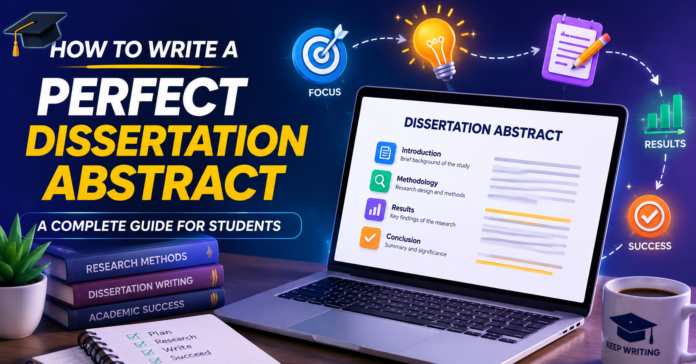
Writing a dissertation is one of the biggest academic challenges university students face. After spending months researching, writing, editing, and analyzing data, many students believe the hard work is finally over. However, there is one final section that often creates confusion and stress: the dissertation abstract.
Although it appears at the beginning of a dissertation, the abstract is usually written last. It acts as a concise summary of the entire research project and gives readers a quick overview of what the dissertation is about. A strong abstract can immediately capture attention, improve readability, and make your research appear more professional and organized.
Many students underestimate the importance of the abstract and either make it too vague or overload it with unnecessary detail. The truth is that your dissertation abstract plays a major role in creating the first impression of your research. Supervisors, examiners, and researchers often read the abstract before deciding whether to continue reading the rest of the dissertation.
In this complete guide, you will learn exactly how to write a perfect dissertation abstract, including structure, formatting, practical examples, expert tips, and common mistakes to avoid.

What Is a Dissertation Abstract?
A dissertation abstract is a short summary of your entire dissertation. It explains the purpose of your research, the methods you used, the key findings, and the overall conclusion.
The abstract allows readers to quickly understand the main idea of your research without reading the full dissertation. Think of it as a “snapshot” of your work.
In most UK universities, dissertation abstracts are usually between 150 and 300 words, although some institutions may have different requirements. Always check your university guidelines before writing.
A good dissertation abstract should answer these important questions:
- What is the research about?
- Why is the topic important?
- What methods were used?
- What were the main findings?
- What conclusions were reached?
Why Is the Dissertation Abstract Important?
Many students focus heavily on chapters like literature review or methodology and ignore the abstract until the last minute. However, the abstract is one of the most important sections of your dissertation.
First impressions matter in academic writing. Your abstract is often the first thing your supervisor or examiner reads. A well-written abstract immediately shows that your research is organized, focused, and professionally presented.
Additionally, online academic databases use abstracts to index research papers and dissertations. This means a strong abstract can improve the visibility of your research.
A high-quality abstract also helps readers decide whether your dissertation is relevant to their interests. If your abstract is weak, unclear, or confusing, readers may lose interest before even reaching the main content.
When Should You Write the Abstract?
One of the most common mistakes students make is trying to write the abstract too early.
The best time to write your dissertation abstract is after you have completed the entire dissertation. This is because the abstract summarizes all sections of your research, including your final results and conclusions.
Once your dissertation is complete, it becomes much easier to identify the key points that should appear in the abstract.
Structure of a Perfect Dissertation Abstract
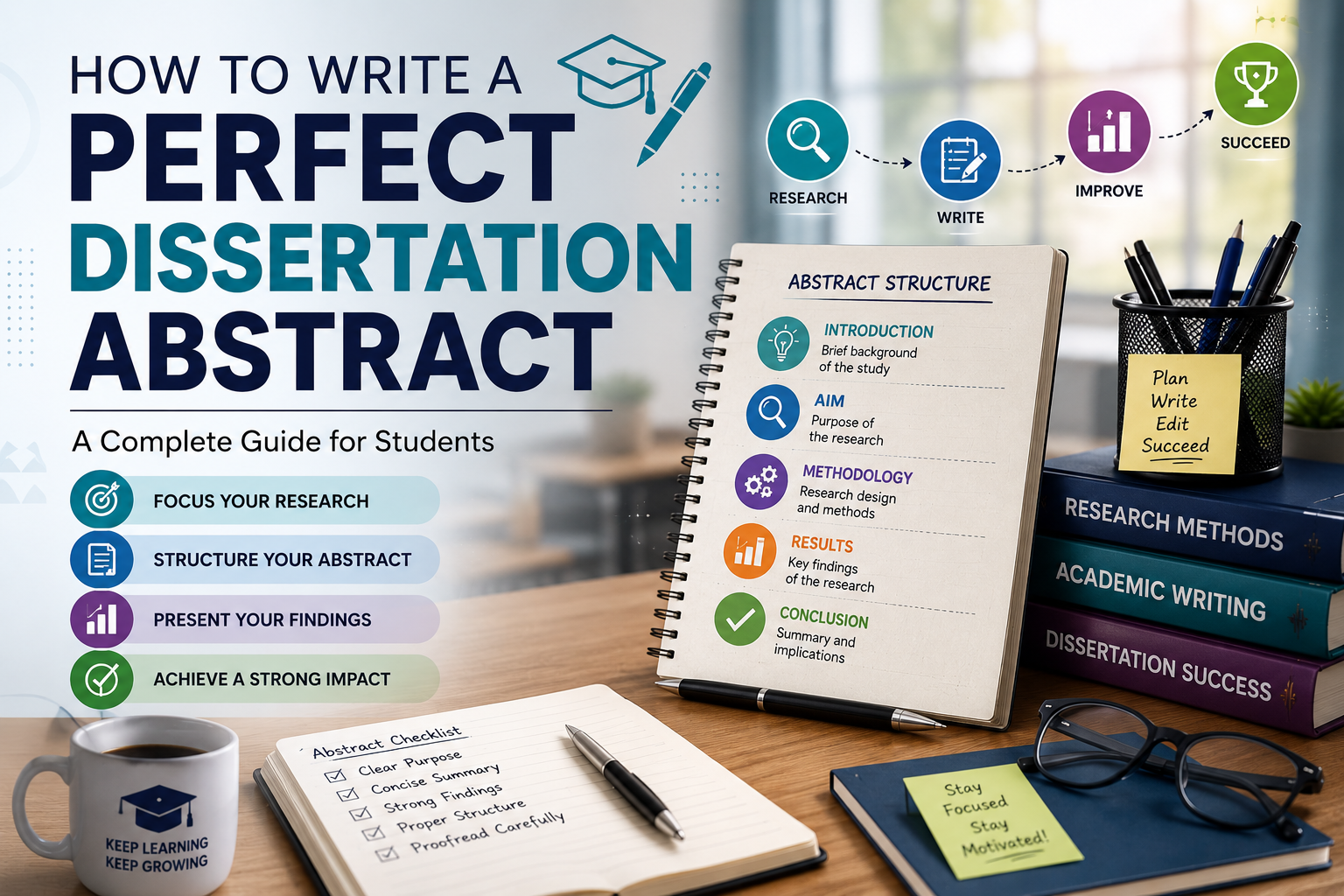
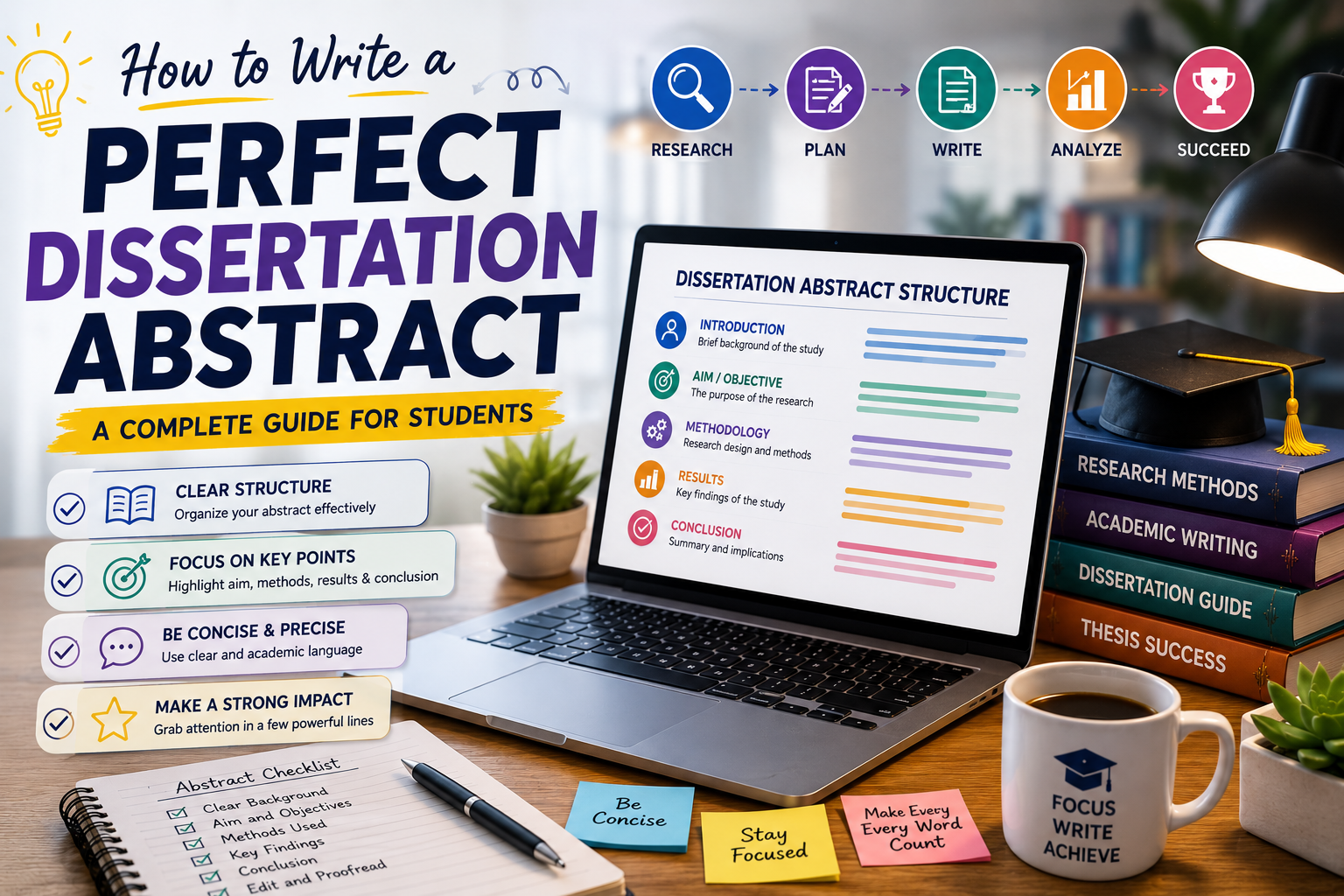
A strong dissertation abstract usually follows a clear structure. Even though it is short, it should include all essential information in a logical order.
Introduction to the Research Topic
Start by briefly introducing your research topic and explaining the main issue or problem your dissertation addresses.
This section should immediately help readers understand the subject area of your study.
For example:
This dissertation explores the impact of social media marketing on consumer purchasing behavior among UK university students.
Keep this part concise and direct. Avoid lengthy background information.
Research Aim or Objective
After introducing the topic, explain the primary aim of your research.
This tells readers exactly what your dissertation attempted to investigate or achieve.
For example:
The study aimed to examine how Instagram influencers affect purchasing decisions among students aged 18–25.
Your research aim should be specific and easy to understand.
Research Methodology
Next, briefly explain the research methods you used.
This may include:
- Qualitative research
- Quantitative research
- Surveys
- Interviews
- Case studies
- Secondary research
For example:
A quantitative research approach was used, involving an online survey completed by 250 university students across the UK.
Do not go into too much detail here. The abstract should summarize the methodology, not fully explain it.
Main Findings
The findings section is one of the most important parts of the abstract.
Here, summarize the key results of your research.
For example:
The findings revealed that influencer credibility and product authenticity significantly affected students’ purchasing decisions.
Focus only on the most important findings. Avoid including unnecessary statistics or detailed analysis.
Conclusion
Finally, end your abstract with a concise conclusion explaining the significance of your research.
For example:
The study concludes that social media marketing plays a substantial role in shaping consumer behavior among young adults in the UK.
A strong conclusion leaves readers with a clear understanding of your research contribution.
Example of a Dissertation Abstract
Here is a simplified example of a dissertation abstract:
This dissertation investigates the impact of remote learning on academic performance among university students in the UK. The research aimed to examine how online education influenced student engagement, motivation, and overall academic achievement during the post-pandemic period. A quantitative research method was used, involving surveys completed by 300 undergraduate students from various UK universities. The findings indicated that while remote learning improved flexibility and accessibility, many students experienced reduced motivation and lower engagement levels. Technical difficulties and lack of interaction with instructors were also identified as significant challenges. The study concludes that although remote learning offers several advantages, universities must develop more interactive teaching strategies to improve student outcomes in online learning environments.
This example is clear, concise, and includes all essential components.
Common Mistakes Students Make When Writing Abstracts
Many dissertation abstracts lose marks because students make avoidable mistakes.
One major mistake is including too much detail. Remember, the abstract is a summary, not a full chapter. Keep your sentences focused and concise.
Another common issue is writing vague statements without clearly explaining the research aim or findings. Readers should immediately understand what your dissertation is about.
Dissertation Editing & Proofreading Services UK: Fast, Reliable & Grade-Boosting Help
Students also often include citations in the abstract. In most cases, references and citations should not appear in abstracts because the section should be completely self-contained.
Grammar mistakes and overly complicated language can also weaken your abstract. Academic writing should sound professional, but it should still be easy to read.
Finally, some students forget to follow the university word limit. Always check the official dissertation guidelines before submission.
Tips for Writing a Strong Dissertation Abstract
Writing a perfect dissertation abstract becomes easier when you follow a few practical strategies.
Start by identifying the most important points from each chapter of your dissertation. Focus only on the information necessary for readers to understand your research.
Use clear and direct language instead of long or complicated sentences. Short paragraphs improve readability and help maintain flow.
Always write in the past tense because you are describing research that has already been completed.
Editing is also extremely important. After writing your abstract, revise it several times to remove repetition, improve clarity, and correct grammar errors.
Reading high-quality dissertation abstracts from your subject area can also help you understand the expected structure and writing style.
If you are struggling with academic writing overall, you may also find our guide on How to Improve Academic Writing Skills for University Students helpful. Likewise, students working on earlier dissertation chapters can explore our article on How to Write a Literature Review for a Dissertation for additional support.
How Long Should a Dissertation Abstract Be?
The ideal length of a dissertation abstract depends on your university requirements.
However, most abstracts are usually:
- Undergraduate dissertations: 150–250 words
- Master’s dissertations: 200–350 words
- PhD theses: 300–500 words
Always prioritize clarity over length. A shorter, focused abstract is better than a long, confusing one.
Should You Include Keywords in the Abstract?
Yes, including relevant keywords naturally within your abstract can improve discoverability in academic databases and search engines.
For example, if your dissertation focuses on “social media marketing,” “consumer behavior,” or “online learning,” these phrases should appear naturally within the abstract.
However, avoid keyword stuffing. Your writing should still sound natural and professional.
Final Checklist Before Submitting Your Abstract
Before finalizing your dissertation abstract, ask yourself these questions:
- Does the abstract clearly explain the research topic?
- Have you included the research aim?
- Did you summarize the methodology?
- Are the main findings clearly stated?
- Is the conclusion concise and meaningful?
- Does the abstract stay within the word limit?
- Have you checked grammar and spelling carefully?
Completing this checklist can significantly improve the quality of your final submission.
Final Thoughts
Writing a dissertation abstract may seem difficult at first, but once you understand its purpose and structure, the process becomes much simpler. A strong abstract summarizes your research clearly, professionally, and concisely while encouraging readers to explore the rest of your dissertation.
Remember that the abstract is often the first section people read, so it deserves careful attention. Focus on clarity, organization, and relevance. Avoid unnecessary detail, follow your university guidelines, and revise thoroughly before submission.
A well-written dissertation abstract not only improves the overall quality of your dissertation but also demonstrates strong academic writing skills and research understanding.
By applying the strategies in this guide, you can create a dissertation abstract that leaves a strong impression on supervisors, examiners, and future readers alike.

