spot_img
Friday, April 24, 2026
spot_img
HomeEducationBest AI Tools for Dissertation Writing in 2026: A Complete Student Guide

Best AI Tools for Dissertation Writing in 2026: A Complete Student Guide

-

Introduction

The demand for the best AI tools for dissertation writing has grown rapidly as students across the UK look for smarter ways to complete their academic work. With tight deadlines, complex research requirements, and high academic standards, artificial intelligence is now playing a major role in helping students succeed.

In 2026, the use of the best AI tools for dissertation writing is no longer optional—it has become a strategic advantage. Students who understand how to use these tools effectively can improve their writing quality, save time, and achieve higher grades.

Why AI Tools Are Transforming Dissertation Writing

The rise of digital education has completely changed how dissertations are researched and written. The best AI tools for dissertation writing are designed to assist students in every stage of their academic journey.Students also read and search about help with master thesis.

Key Reasons for the Growing Trend

  • Faster research and data collection
  • Improved grammar and clarity
  • Advanced plagiarism detection
  • Smart content structuring

Students in the UK are increasingly adopting the best AI tools for dissertation writing to stay competitive and meet university expectations.

Top Benefits of Using the Best AI Tools for Dissertation Writing

1. Enhanced Writing Quality

AI-powered tools analyze sentence structure, tone, and grammar, helping students produce professional academic content. This is why the best AI tools for dissertation writing are widely recommended.

2. Time Efficiency

Writing a dissertation can take months, but AI tools significantly reduce the workload by automating repetitive tasks.

3. Accurate Research Support

AI tools can suggest relevant academic sources, making the research process faster and more reliable.

4. Better Organization

From introductions to conclusions, the best AI tools for dissertation writing help structure content logically.

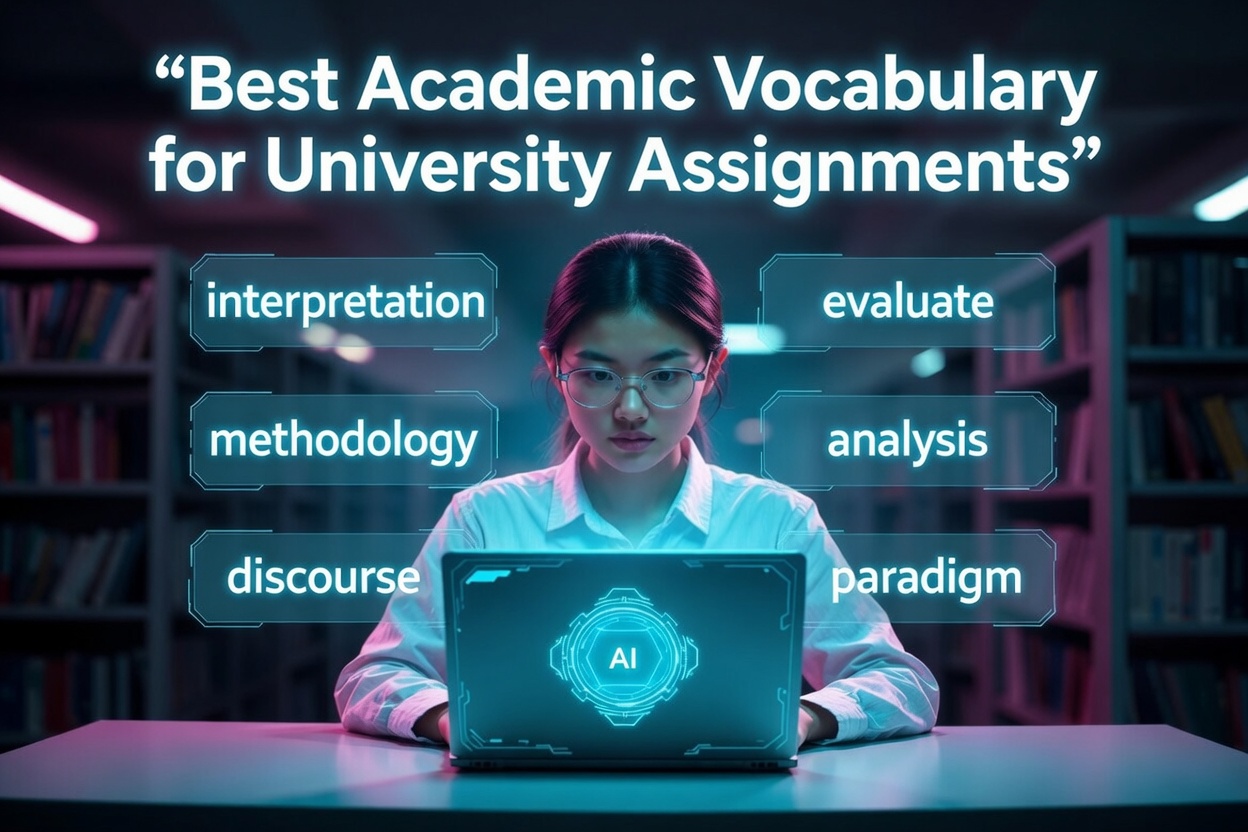
Best AI tools for dissertation writing in 2026 student guide with AI technology and female student working on laptop.Best AI Tools for Dissertation Writing in 2026

1. Grammar and Proofreading Tools

These tools help eliminate grammatical errors and improve readability, ensuring your dissertation meets academic standards.

2. AI Writing Assistants

AI writing assistants provide suggestions for improving clarity, tone, and structure.

3. Research Tools

AI-powered research platforms help students find credible academic sources quickly.

4. Citation and Referencing Tools

Managing references becomes easier with AI tools that automatically format citations in styles like APA, Harvard, or MLA.

How UK Students Can Use AI Tools Effectively

To get the most out of the best AI tools for dissertation writing, students must use them strategically.

Practical Tips

  • Use AI for editing, not full writing
  • Cross-check all information
  • Maintain originality and avoid plagiarism
  • Follow university guidelines strictly

Using the best AI tools for dissertation writing responsibly ensures academic integrity and better results.For students who need reliable and professional support, Online Essay Writing Services UK remains a trusted choice .

Best AI Tools for Dissertation Writing vs Traditional Writing

The comparison between AI-assisted writing and traditional methods highlights the strengths of both approaches.

AI Tools

  • Faster and more efficient
  • Helps with editing and proofreading
  • Improves structure and clarity

Traditional Writing

  • Encourages critical thinking
  • Provides deeper understanding
  • Maintains originality

The best approach is to combine both methods. This is why the best AI tools for dissertation writing are seen as support systems rather than replacements.

Best AI tools for dissertation writing in 2026 student guide with AI technology and female student working on laptop.

Common Mistakes Students Make When Using AI

Even though AI tools are helpful, misuse can negatively impact academic performance.

Mistakes to Avoid

  • Over-reliance on AI-generated content
  • Ignoring plagiarism checks
  • Not verifying research sources
  • Submitting unedited AI output

To truly benefit from the best AI tools for dissertation writing, students must stay actively involved in the writing process.Students read about How to Read Less but Achieve Academic Goals to improve your study.

Ethical Considerations in AI Writing

Universities in the UK have strict policies regarding academic integrity. While the best AI tools for dissertation writing are allowed in many cases, misuse can lead to serious consequences.This is where professional services like  Essay Writing Assignments become invaluable

Ethical Guidelines

  • Use AI as a support tool
  • Avoid generating full dissertations with AI
  • Always cite sources properly
  • Follow institutional rules

Responsible use of the best AI tools for dissertation writing ensures compliance with academic standards.

Future of AI in Dissertation Writing

The future of academic writing is closely linked with technological advancements. The best AI tools for dissertation writing will continue to evolve, offering more advanced features such as:

  • Real-time research suggestions
  • AI-driven topic generation
  • Automated data analysis
  • Personalized learning support

UK universities are gradually integrating AI into their academic systems, making it an essential skill for students.

Best AI tools for dissertation writing in 2026 student guide with AI technology and female student working on laptop.How Dissertation Services Can Help

While AI tools are useful, many students still struggle with complex research and writing tasks. Professional dissertation services provide expert guidance, ensuring high-quality work that meets academic standards.

Combining expert help with the best AI tools for dissertation writing can significantly improve academic success.

Literature Review & Discovery

Finding a research gap is no longer about endless scrolling. In 2026, AI tools act as “semantic maps,” helping you see how papers connect over time.

Consensus: Best for getting evidence-backed answers. It searches over 200 million peer-reviewed papers to give you a “Consensus Meter,” showing if the scientific community leans “Yes,” “No,” or “Mixed” on a specific question.

Elicit: The leader in “Literature Matrices.” Elicit can analyze a batch of PDFs and automatically extract their methodology, sample sizes, and key findings into a table for easy comparison.

ResearchRabbit: Often called the “Spotify for Papers.” You feed it a few “seed” papers, and it creates a visual map of related work, alerting you whenever a new, relevant study is published.

Litmaps: Essential for visualizing citation networks. It helps you find the “ancestor” papers (foundational studies) and “descendant” papers (modern updates) of your topic.

Drafting & Argumentation

Writing a 100-page document requires more than a grammar checker. You need tools that understand the logic of an academic argument.

  • Thesify: A standout tool in 2026. Unlike general AI, it evaluates the strength of your arguments. It flags where your claims lack evidence and suggests where your transitions are weak.

    Writefull: Built specifically for researchers, it integrates into Word or Overleaf (LaTeX). It uses “Big Data” from millions of published journal articles to suggest academic phrasing that fits your specific discipline (e.g., STEM vs. Humanities).

    Paperpal: Perfect for the final “polish.” It offers real-time editing for academic tone and performs “technical checks” to ensure your citations match your reference list before you submit.Students read about Complete Guide to Assignment Writing for Students to achieve their goals.


     Data Analysis (Qualitative & Quantitative)

In 2026, you don’t need to be a coding expert to run complex statistics or code hundreds of interviews.

  • Julius AI: This is a “data analyst in a chat box.” You upload your CSV or Excel files and ask, “Run a linear regression on these variables and create a publication-ready scatter plot.” It writes the Python/R code in the background and gives you the result.

  • NVivo (AI Mode): The classic qualitative tool has evolved. It now uses AI to suggest “sub-codes” for your interview transcripts, helping you identify themes much faster while keeping you in control of the final interpretation.

    ChatPDF / Humata: If you have a 400-page policy document or a thick theory book, these tools allow you to “interrogate” the PDF to find specific quotes or data points instantly.

    Advanced Literature Synthesis: Moving Beyond Summaries

    In the early 2020s, AI just summarized PDFs. In 2026, tools like Connected Papers and Litmaps allow for “temporal discovery.” They don’t just show you what is relevant; they show you how a theory has evolved or been debunked over the last decade.

  •  The “Human-in-the-Loop” Drafting Process

    A common pitfall in 2026 is “AI-homogenization”—where every student’s writing sounds the same. To avoid this, use a tiered writing strategy:

    Phase 1: The AI Scaffolding

    Use Thesify or Jenni AI to build your “Argumentative Skeleton.” Instead of asking it to “write my intro,” ask it to:

    Phase 2: Academic Refinement

    Once you have your draft, run it through Writefull or Paperpal. These tools are now specifically tuned to the “language of your field.” A Physics dissertation needs a different tone than a Sociology one; these tools help you match the high-level linguistic patterns expected by your specific committee.

    Research Rabbit: Think of this as your “Intelligence Agent.” By 2026, its “Discovery” engine can proactively find newly published pre-prints that match your specific research niche before they even hit major databases.Student reads about this topic Time Management for Students: The Complete Guide to Boost Productivity and Reduce Stress to improve time management .

  •  Data Analysis & Visualization

    By 2026, the line between data scientist and researcher has blurred thanks to “Natural Language Analysis.”

    Semantic Scholar & Scite.ai: Use these to see the sentiment of citations. In 2026, Scite can tell you if a paper has been “supported” or “contrasted” by subsequent research. This is vital for your Methodology chapter—you can explicitly state why you chose a framework based on its proven reliability in recent “Smart Citations.”Julius AI & Vizly: These are the gold standards for quantitative students. You can chat with your dataset. For example, “Run a sensitivity analysis on my variables and output a LaTeX table for my Results chapter.” It eliminates the “coding wall” that used to stop humanities students from using complex stats.

    NVivo (AI Enhanced): For qualitative researchers, AI now performs “Thematic Auto-Coding.” It suggests themes based on your transcripts, but you—the researcher—must validate the “Reflexivity” (how your own bias affects the interpretation), which is a major 2026 grading requirement.

Conclusion

The rise of the best AI tools for dissertation writing reflects a major shift in how students approach academic work. These tools offer efficiency, accuracy, and improved writing quality, making them essential for modern education.

However, success depends on how effectively students use these tools. By combining AI assistance with critical thinking and proper research, students can achieve outstanding results in their dissertations.

Related articles

Stay Connected

0FansLike
0FollowersFollow
0FollowersFollow
0SubscribersSubscribe
spot_img

Latest posts