


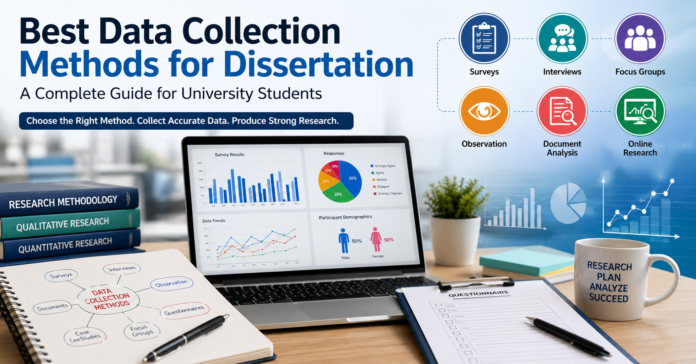
Writing a dissertation is one of the most important academic tasks students face during university life. Whether you are studying business, nursing, psychology, engineering, law, or social sciences, your dissertation represents months of research, planning, analysis, and academic writing. One of the most critical sections of any dissertation is data collection because the quality of your research findings depends heavily on how you gather information.
Many students struggle when choosing the best data collection methods for a dissertation. Some are unsure whether to use surveys, interviews, questionnaires, observations, or secondary research sources. Others become confused about qualitative and quantitative research approaches. Choosing the wrong method can weaken your research credibility and affect your final grades.
This comprehensive guide explains the best data collection methods for dissertations in detail. You will learn how each method works, when to use it, its advantages and disadvantages, practical examples, ethical considerations, and expert strategies to improve your research quality. By the end of this article, you will understand exactly how to select the most suitable data collection method for your dissertation project.
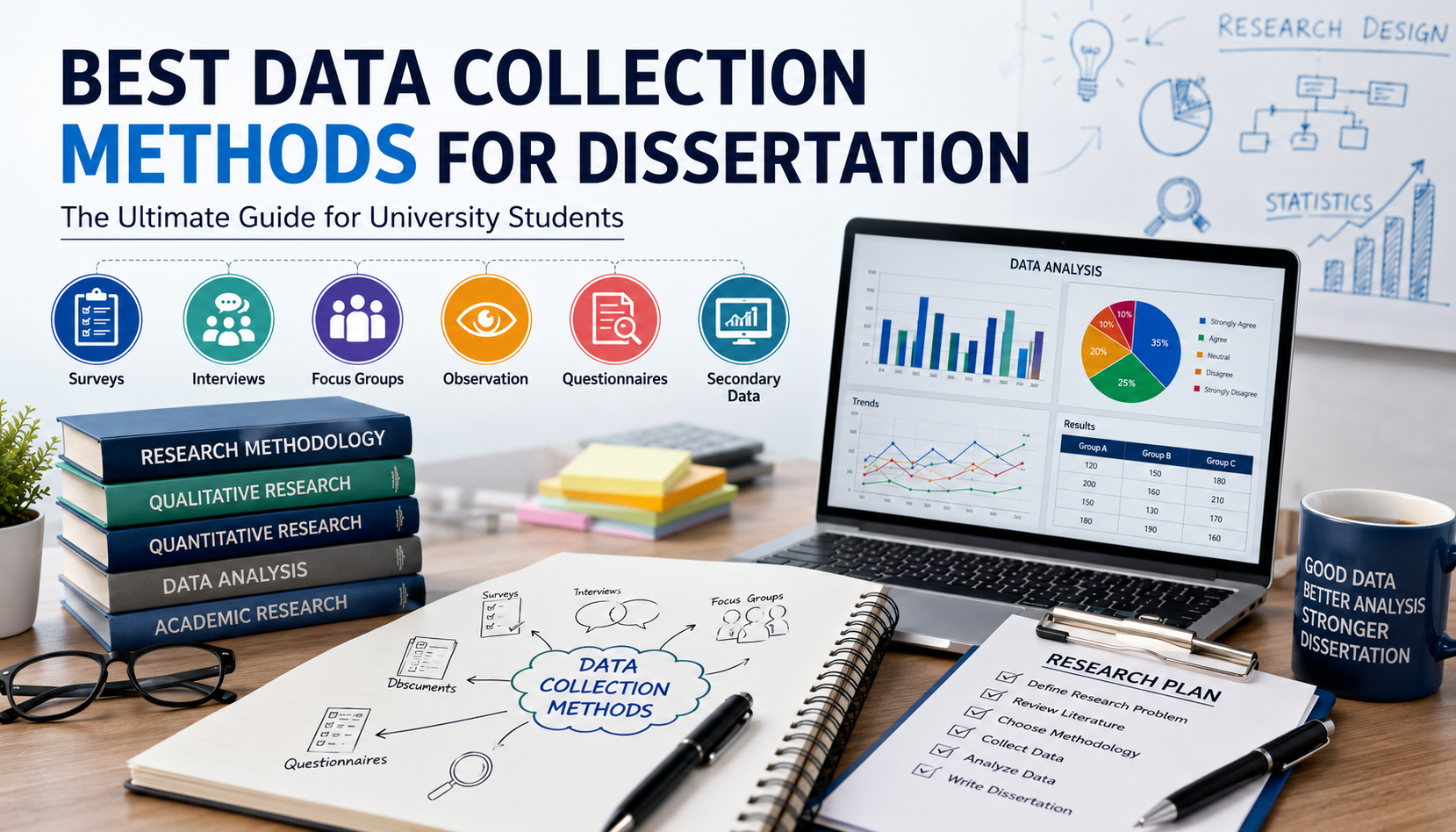
Understanding Data Collection in Dissertation Research
Data collection refers to the process of gathering information to answer your research questions and support your dissertation objectives. It is a fundamental part of research methodology because it provides the evidence required to analyze findings and draw conclusions.
Without reliable data collection, a dissertation lacks academic strength. Universities expect students to use systematic, ethical, and academically valid methods to gather information. This allows researchers to produce trustworthy results and demonstrate critical thinking skills.
Data collection methods generally fall into two categories:
Qualitative Data Collection
Qualitative research focuses on understanding experiences, opinions, behaviors, and meanings. It usually involves non-numerical data such as interview responses, observations, and open-ended discussions.
Examples include:
- Interviews
- Focus groups
- Case studies
- Observations
Quantitative Data Collection
Quantitative research focuses on numerical data, measurements, statistics, and patterns. This method helps researchers analyze relationships and trends using mathematical techniques.
Examples include:
- Surveys
- Questionnaires
- Experiments
- Statistical databases
Some dissertations also use a mixed-methods approach that combines both qualitative and quantitative research methods.
Choosing the correct approach depends on your research topic, objectives, academic field, and available resources.
Why Choosing the Right Data Collection Method Matters
The data collection method you choose affects every aspect of your dissertation. It influences the quality of your analysis, the reliability of findings, and the overall credibility of your research.
A suitable method helps you:
- Gather relevant information effectively
- Answer research questions accurately
- Improve research validity
- Save time and resources
- Produce stronger academic arguments
- Meet university research standards
Using an inappropriate method can lead to weak findings, unreliable conclusions, and lower dissertation grades.
For example, if your research investigates customer satisfaction levels, a quantitative survey may work better than observations. On the other hand, if you want to understand students’ emotional experiences during online learning, qualitative interviews may provide deeper insights.
Primary vs Secondary Data Collection
Before selecting a data collection method, students must understand the difference between primary and secondary data.
Primary Data Collection
Primary data refers to original information collected directly by the researcher for a specific study.
Examples include:
- Conducting interviews
- Creating surveys
- Observing participants
- Running experiments
Primary research gives students more control over the quality and relevance of the information collected.
Advantages of Primary Data
- Highly specific to research objectives
- More accurate and updated
- Greater research originality
- Better control over data quality
Disadvantages of Primary Data
- Time-consuming
- Expensive
- Requires ethical approval
- Difficult participant recruitment
Secondary Data Collection
Secondary data involves using existing information collected by other researchers, institutions, or organizations.
Examples include:
- Academic journals
- Government reports
- Books
- Statistical databases
- Company records
Secondary research is commonly used in literature reviews and theoretical studies.
Advantages of Secondary Data
- Saves time
- Cost-effective
- Easily accessible
- Useful for background research
Disadvantages of Secondary Data
- May be outdated
- Limited relevance
- Lack of control over quality
- Possible bias in sources
Surveys as a Data Collection Method
Surveys are among the most popular dissertation data collection methods, especially in business, marketing, education, and social sciences.
A survey involves asking participants a series of questions to gather information about attitudes, behaviors, experiences, or opinions.
Surveys can be distributed:
- Online
- Through email
- Face-to-face
- By telephone
Online survey platforms such as Google Forms and SurveyMonkey have made survey research more accessible for students.
When to Use Surveys
Surveys are ideal when:
- You need responses from many participants
- Your research requires statistical analysis
- You want measurable data
- You have limited time
For example, a business student researching customer satisfaction may distribute surveys to consumers and analyze the results statistically.
Advantages of Surveys
One major advantage of surveys is their ability to collect large amounts of data quickly. Researchers can reach hundreds of participants within a short time. Surveys also allow standardized questions, making responses easier to compare and analyze.
Another benefit is cost efficiency. Online surveys reduce printing and travel expenses. Participants may also feel more comfortable providing honest answers anonymously.
Disadvantages of Surveys
Despite their popularity, surveys also have limitations. Some participants may provide inaccurate or incomplete responses. Low response rates can also affect data reliability.
Closed-ended survey questions may not capture deeper emotions or motivations. Additionally, poorly designed surveys can produce biased results.
Tips for Creating Effective Dissertation Surveys
When designing surveys for your dissertation:
- Keep questions clear and simple
- Avoid leading questions
- Use logical question order
- Test the survey before distribution
- Limit survey length
- Ensure anonymity when necessary
Good survey design improves response quality and research reliability.
Questionnaires in Dissertation Research
Questionnaires are closely related to surveys but are often considered a specific research instrument used to collect responses systematically.
A questionnaire contains structured questions that participants answer independently.
Questionnaires may include:
- Multiple-choice questions
- Rating scales
- Open-ended questions
- Yes or no questions
Structured vs Unstructured Questionnaires
Structured Questionnaires
Structured questionnaires contain fixed questions with predetermined answer options. These are useful for quantitative research and statistical analysis.
Unstructured Questionnaires
Unstructured questionnaires allow open responses and encourage participants to express thoughts freely. These are useful for qualitative research.
Advantages of Questionnaires
Questionnaires are easy to distribute and analyze. They are particularly useful for collecting standardized information from large groups.
Students often prefer questionnaires because they:
- Save time
- Are affordable
- Reduce interviewer bias
- Provide organized data
Disadvantages of Questionnaires
Questionnaires may limit detailed responses, especially when using closed questions. Participants may also misunderstand questions without clarification.
Another issue is participant engagement. Long or confusing questionnaires often result in incomplete responses.
Interviews as a Data Collection Method
Interviews are one of the most valuable qualitative research methods for dissertations. They involve direct communication between the researcher and participants.
Interviews help researchers gather detailed insights, opinions, emotions, and personal experiences.
Types of Interviews
Structured Interviews
Structured interviews follow a fixed set of questions asked in the same order. These interviews are easier to compare and analyze.
Semi-Structured Interviews
Semi-structured interviews combine planned questions with flexibility. Researchers can ask follow-up questions to explore topics in more depth.
Unstructured Interviews
Unstructured interviews are conversational and flexible. They allow participants to discuss experiences openly.
When to Use Interviews
Interviews work best when:
- You need detailed responses
- Research focuses on personal experiences
- Topics require deeper understanding
- Participant perspectives are important
For example, psychology students researching mental health experiences may benefit from interviews.
Advantages of Interviews
Interviews provide rich, detailed information that surveys often cannot capture. Researchers can clarify responses, ask follow-up questions, and observe participant emotions.
They also allow flexibility and deeper exploration of complex issues.
Disadvantages of Interviews
Interviews require significant time and effort. Scheduling participants, recording discussions, and transcribing data can be challenging.
Researcher bias may also affect responses, especially during face-to-face interviews.
Tips for Conducting Successful Interviews
To improve interview quality:
- Prepare clear research questions
- Build participant trust
- Record interviews with permission
- Remain neutral
- Ask open-ended questions
- Practice active listening
Proper interview techniques improve data credibility and participant engagement.
Focus Groups in Dissertation Research
Focus groups involve group discussions led by a moderator. Researchers gather opinions from multiple participants simultaneously.
This method is common in marketing, education, healthcare, and social sciences.
How Focus Groups Work
A small group of participants discusses a specific topic while the researcher guides the conversation.
For example, a student researching university student experiences with online learning may organize a focus group discussion.
Advantages of Focus Groups
Focus groups encourage interaction and idea sharing. Participants may discuss issues more openly in group settings.
Researchers can observe:
- Group dynamics
- Shared opinions
- Emotional reactions
- Diverse perspectives
Disadvantages of Focus Groups
Some participants may dominate discussions while quieter individuals contribute less. Sensitive topics may also discourage honest responses.
Managing focus groups requires strong moderation skills.
Observation as a Data Collection Method
Observation involves watching and recording behaviors, actions, or events in natural settings.
This method is widely used in education, sociology, healthcare, and psychology research.
Types of Observation
Participant Observation
The researcher actively participates in the environment being studied.
Non-Participant Observation
The researcher observes without involvement.
Structured Observation
Researchers use predefined criteria for recording behaviors.
Unstructured Observation
Researchers observe freely without strict guidelines.
Advantages of Observation
Observation provides real-time behavioral data and reduces reliance on self-reported responses.
Researchers can study:
- Human interactions
- Social behavior
- Classroom activities
- Workplace practices
Disadvantages of Observation
Observation can be time-consuming and subject to researcher interpretation.
Participants may also change behavior when they know they are being observed.
Case Studies in Dissertation Research
Case study research involves detailed analysis of a single individual, organization, event, or situation.
This method allows researchers to explore complex issues deeply.
When to Use Case Studies
Case studies work best when:
- Research focuses on a specific example
- In-depth analysis is required
- Real-world context matters
Business and management dissertations often use case studies.
Advantages of Case Studies
Case studies provide detailed insights and practical understanding. They also allow researchers to connect theory with real-life situations.
Disadvantages of Case Studies
Findings from case studies may not apply broadly to larger populations.
Researchers must also avoid personal bias during interpretation.
Experiments in Dissertation Research
Experimental research tests relationships between variables under controlled conditions.
Experiments are common in:
- Psychology
- Medicine
- Science
- Engineering
How Experiments Work
Researchers manipulate one variable and measure its effect on another variable.
For example, a psychology student may study how sleep affects memory performance.
Advantages of Experiments
Experiments provide strong evidence for cause-and-effect relationships.
They also offer:
- Controlled conditions
- Measurable results
- High reliability
Disadvantages of Experiments
Experiments may require specialized equipment, ethical approval, and controlled environments.
Artificial settings can also reduce realism.
Best Universities in UK for Dissertation & Thesis 2026
Online Data Collection Methods
Digital technology has transformed dissertation research. Many students now collect data online using:
- Online surveys
- Social media research
- Virtual interviews
- Web analytics
- Online databases
Online methods are efficient, affordable, and accessible.
However, researchers must consider:
- Privacy concerns
- Data security
- Participant authenticity
- Ethical approval
Choosing the Best Data Collection Method for Your Dissertation
Selecting the right method depends on several important factors.
Research Objectives
Your research goals should guide method selection. If you need measurable trends, quantitative methods may work best. If you need deeper understanding, qualitative methods are more suitable.
Research Topic
Different academic subjects require different approaches. Scientific research often uses experiments, while social sciences frequently use interviews and surveys.
Time and Budget
Some methods require more resources than others. Interviews and experiments can be expensive and time-consuming, while online questionnaires are more affordable.
Participant Availability
Consider whether participants are easy to access. Large-scale surveys may require significant recruitment efforts.
Ethical Considerations
Universities require ethical research practices. Students must protect participant privacy, obtain informed consent, and avoid harm.
Ethical Considerations in Data Collection
Ethics are essential in dissertation research. Universities expect students to conduct responsible and professional studies.
Key ethical principles include:
- Informed consent
- Confidentiality
- Voluntary participation
- Data protection
- Honesty in reporting findings
Researchers must explain study purposes clearly and ensure participants understand their rights.
Common Mistakes Students Make During Data Collection
Many students lose marks because of avoidable data collection mistakes.
One common problem is choosing methods that do not align with research objectives. Another issue is collecting insufficient data.
Poor questionnaire design, biased interview questions, and inadequate sample sizes also affect research quality.
Students should also avoid:
- Ignoring ethical guidelines
- Relying on unreliable sources
- Using unclear questions
- Failing to test research instruments
Careful planning helps prevent these problems.
How to Improve Dissertation Data Quality
High-quality data strengthens your dissertation credibility and analysis.
To improve data quality:
- Pilot test surveys and interviews
- Use reliable research instruments
- Verify secondary sources
- Maintain accurate records
- Avoid biased questions
- Use appropriate sampling methods
Good organization and planning also improve research efficiency.
Sampling Methods in Dissertation Research
Sampling refers to selecting participants from a larger population.
Choosing the correct sample is important because it affects research validity.
Probability Sampling
Probability sampling gives all participants equal selection chances.
Examples include:
- Random sampling
- Stratified sampling
- Systematic sampling
Non-Probability Sampling
Non-probability sampling does not provide equal selection chances.
Examples include:
- Convenience sampling
- Snowball sampling
- Purposive sampling
Students should explain sampling choices clearly in their methodology section.
Data Analysis After Collection
Once data collection is complete, researchers must analyze findings carefully.
Quantitative analysis often uses:
- Statistical software
- Graphs
- Charts
- Numerical interpretation
Qualitative analysis involves:
- Thematic analysis
- Coding
- Pattern identification
- Interpretation of responses
Effective analysis helps answer research questions accurately.
Best Tools for Dissertation Data Collection
Several digital tools can simplify dissertation research.
Popular survey tools include:
- Google Forms
- SurveyMonkey
- Qualtrics
Interview recording tools include:
- Zoom
- Microsoft Teams
- Otter.ai
For data analysis, students often use:
- SPSS
- NVivo
- Excel
- R software
Choosing the right tools improves efficiency and organization.
Example of Choosing a Data Collection Method
Imagine a student researching how social media affects student academic performance.
Possible methods include:
- Surveys to collect responses from many students
- Interviews for deeper understanding
- Academic performance records for statistical analysis
A mixed-methods approach could combine both quantitative and qualitative data.
This example demonstrates how research objectives influence method selection.
Writing the Data Collection Section in a Dissertation
The methodology chapter should clearly explain:
- Research approach
- Data collection method
- Sampling strategy
- Ethical considerations
- Data analysis techniques
Students should justify why specific methods were chosen and explain how they support research objectives.
Clear methodology writing improves academic credibility.
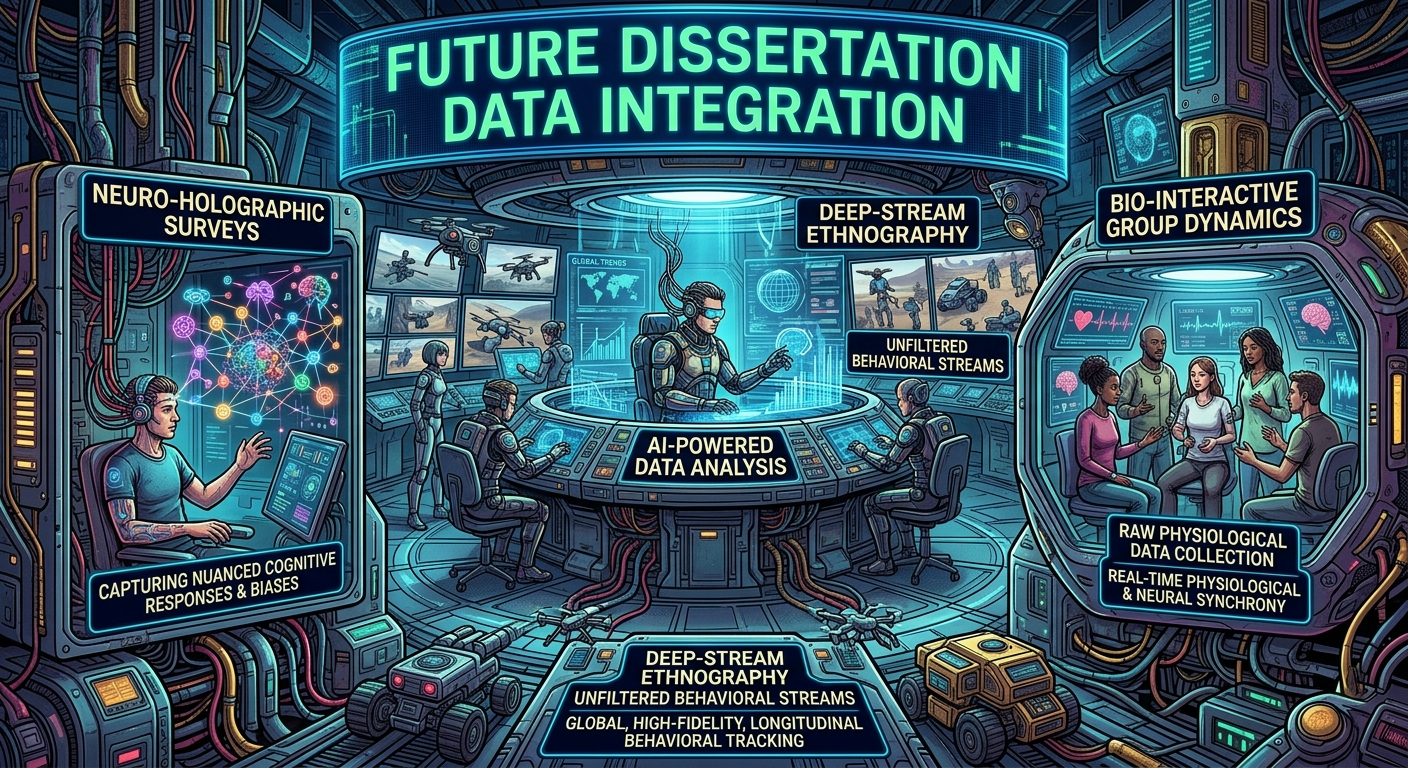
Future Trends in Dissertation Data Collection
Technology continues changing academic research methods.
Emerging trends include:
- Artificial intelligence research tools
- Big data analysis
- Online participant recruitment
- Automated transcription software
- Digital ethnography
Students should remain updated with modern research practices to improve dissertation quality.
Final Thoughts
Choosing the best data collection methods for a dissertation is one of the most important decisions students make during academic research. The success of your dissertation depends heavily on the quality, reliability, and relevance of the information you collect.
There is no single method that works for every research project. Surveys, interviews, observations, focus groups, case studies, experiments, and secondary research all have unique strengths and limitations. The best choice depends on your research questions, academic discipline, available resources, and overall research goals.
Students who carefully plan their methodology, follow ethical guidelines, and use reliable research strategies are more likely to produce strong dissertations and achieve higher academic grades.
A well-designed data collection process not only improves your dissertation findings but also strengthens your research skills for future academic and professional success.
If you are currently preparing your dissertation, start by clearly defining your research objectives and understanding the type of data you need. Once you identify your goals, selecting the right data collection method becomes much easier and more effective.

