


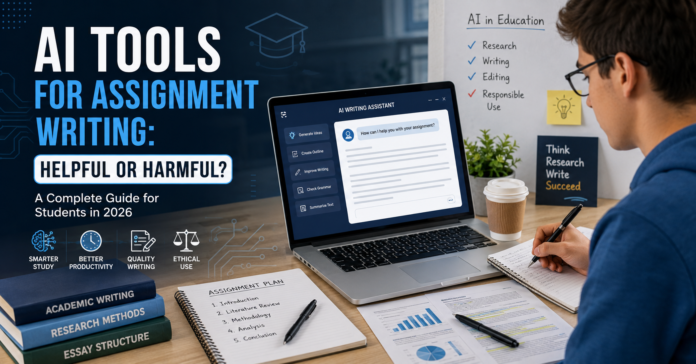
Artificial intelligence has rapidly transformed the way students study, research, and complete academic tasks. From generating essay ideas to improving grammar and structure, AI-powered writing tools are now widely used in schools, colleges, and universities around the world. Platforms like ChatGPT, Grammarly, QuillBot, and other academic writing assistants have become common study companions for students trying to manage deadlines and improve their work.
However, the rise of AI in education has also created serious debates. Some educators believe AI tools can improve productivity and learning, while others argue they encourage academic dishonesty and reduce critical thinking skills. As universities increasingly update their policies regarding AI-generated content, students are left wondering: are AI tools for assignment writing genuinely helpful, or are they harmful in the long run?
This complete guide explores the advantages, disadvantages, ethical concerns, and best practices of using AI tools for assignment writing. Whether you are a university student looking for smarter study methods or simply curious about the future of academic writing, this article will help you understand how AI should — and should not — be used in education.
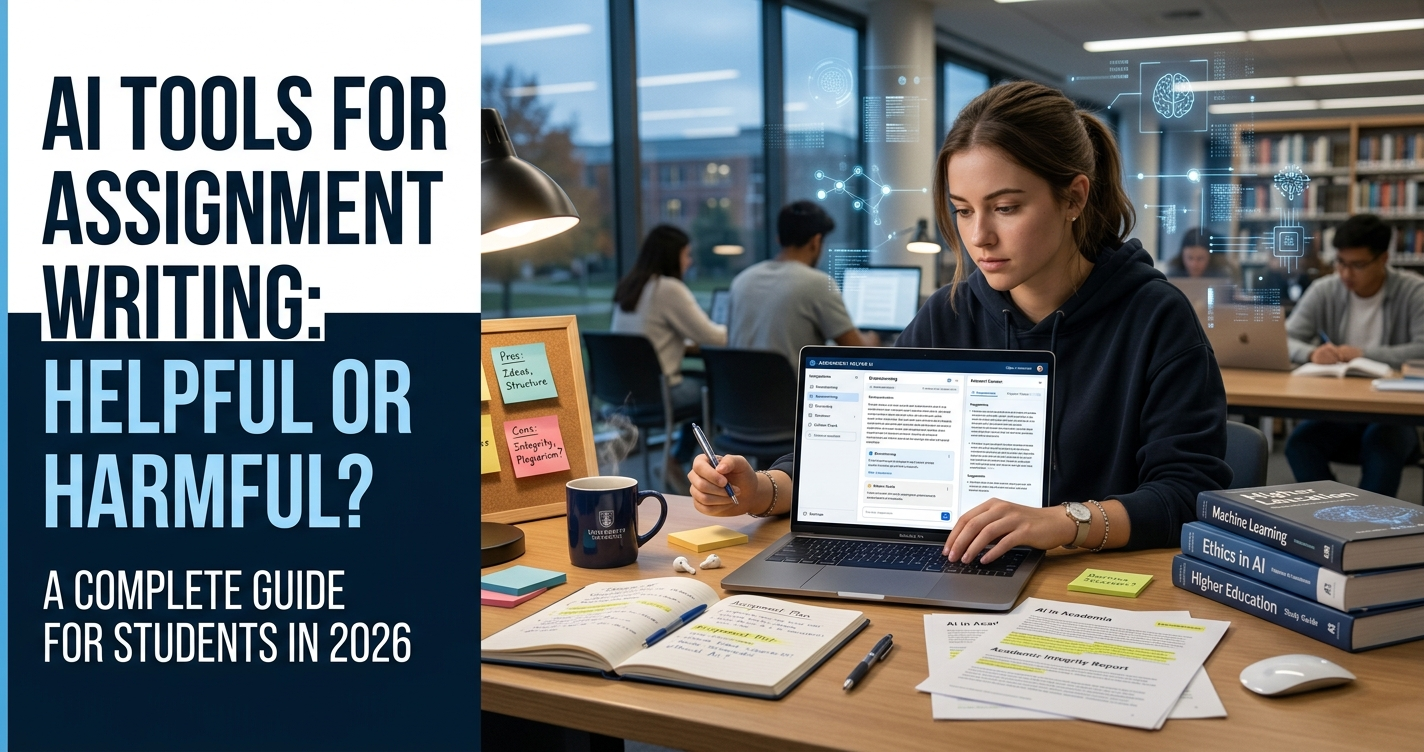
Understanding AI Tools for Assignment Writing
AI writing tools are software programs powered by artificial intelligence and machine learning technologies. These tools can generate text, suggest sentence improvements, summarize articles, check grammar, create outlines, and even assist with research ideas.
Over the last few years, AI tools have become more advanced and accessible. Students can now use AI to brainstorm essay topics, structure assignments, improve readability, and refine academic language within seconds.
Some of the most commonly used AI tools among students include:
- ChatGPT for idea generation and drafting
- Grammarly for grammar and style correction
- QuillBot for paraphrasing and rewriting
- Notion AI for note-taking and organization
- Google Gemini for research assistance
These tools are designed to save time and improve writing quality. However, their impact depends heavily on how students use them.
MBA Dissertation Topics That Impress UK Universities: A Complete Guide for 2026 Students
Why Students Are Turning to AI Tools
University life can be demanding. Students often balance multiple assignments, exams, part-time jobs, and personal responsibilities at the same time. In such situations, AI tools may appear to be the perfect solution.
One major reason students rely on AI is speed. Writing an assignment from scratch can take several hours or even days. AI tools can quickly generate outlines, summarize lengthy articles, and suggest content ideas, helping students manage tight deadlines more effectively.
Another reason is confidence. Many students struggle with academic writing, especially international students who may not be native English speakers. AI tools can improve grammar, vocabulary, sentence structure, and overall clarity, making assignments more polished and professional.
Students also use AI for brainstorming purposes. Sometimes the hardest part of assignment writing is simply getting started. AI tools can provide topic suggestions, thesis statements, and introductory paragraphs that help students overcome writer’s block.
While these benefits are significant, it is important to understand where the line between assistance and dependency begins.
The Benefits of AI Tools in Academic Writing
Improved Writing Quality
One of the biggest advantages of AI writing tools is their ability to improve grammar and readability. Tools like Grammarly can identify punctuation mistakes, awkward sentences, and spelling errors instantly.
For students who lack confidence in writing, these tools act as virtual editors that enhance clarity and professionalism. Better grammar and structure can also improve grades, especially in formal academic assignments.
Faster Research and Planning
AI tools can help students organize ideas and create assignment structures quickly. Instead of spending hours planning content, students can generate outlines and research summaries within minutes.
For example, a student writing a business essay can use AI to identify key themes, suggest case studies, or summarize academic concepts. This makes the research process more manageable and less overwhelming.
Better Time Management
University students often face multiple deadlines simultaneously. AI tools reduce the time required for editing, proofreading, and formatting, allowing students to focus on understanding the subject rather than struggling with technical writing issues.
Used responsibly, AI can improve productivity and help students balance their academic workload more efficiently.
Learning Support for Students
AI tools can also function as educational assistants. Students can ask questions, request explanations of difficult concepts, or receive simplified summaries of complex topics.
For example, a student confused about referencing styles can use AI to understand the differences between APA, Harvard, and MLA formatting. In this way, AI supports learning rather than replacing it.
The Risks and Harmful Effects of AI Writing Tools
Despite their advantages, AI tools also come with several serious concerns. Overreliance on AI can negatively affect learning, creativity, and academic integrity.
Risk of Plagiarism and Academic Misconduct
Many universities now use AI detection tools to identify content generated by artificial intelligence. Submitting fully AI-written assignments can violate academic integrity policies and may result in penalties.
Although AI-generated text may appear original, it can still contain inaccurate information, fabricated references, or unintentionally copied ideas. Students who blindly trust AI content without reviewing it carefully risk serious academic consequences.
Academic writing should reflect a student’s own understanding and critical thinking abilities. Using AI to completely replace personal effort can damage both learning outcomes and academic credibility.

Reduced Critical Thinking Skills
Assignment writing is not only about completing tasks; it is part of the learning process. Researching topics, analyzing arguments, and developing original ideas help students build critical thinking skills.
When students rely too heavily on AI-generated responses, they may stop engaging deeply with the subject matter. Over time, this dependency can weaken problem-solving abilities and independent thinking.
Universities value originality, analysis, and intellectual development. AI should support these skills, not replace them.
Inaccurate or Misleading Information
AI tools are not always reliable. Sometimes they provide outdated information, incorrect facts, or fake academic references. Students who use AI-generated content without verification may unknowingly submit inaccurate work.
For example, AI might generate references that do not actually exist or provide misleading interpretations of research findings. This can seriously affect assignment quality and credibility.
Students should always cross-check information using trusted academic sources such as journals, textbooks, and university libraries.
Loss of Personal Writing Style
Every student has a unique writing voice and way of expressing ideas. Excessive use of AI tools can make assignments sound robotic, generic, or unnatural.
Lecturers often notice when a student’s writing style suddenly changes dramatically. This can raise concerns about authenticity and originality.
Maintaining a balance between AI assistance and personal input is essential for preserving academic identity.
Are Universities Against AI Tools?
Most universities are not completely against AI tools, but they do expect students to use them responsibly and ethically.
Educational institutions generally differentiate between acceptable assistance and academic misconduct. For example, using Grammarly to improve grammar is usually acceptable, while submitting an entirely AI-generated dissertation is not.
Many universities are now updating their academic integrity policies to address AI usage specifically. Students are encouraged to:
- Use AI as a support tool rather than a replacement
- Cite AI-generated assistance where required
- Verify all information independently
- Maintain originality in assignments
Understanding your university’s policies regarding AI usage is extremely important before using these tools in academic work.
How Students Can Use AI Ethically
AI tools are most beneficial when they are used to support learning rather than avoid effort. Ethical AI usage involves combining technology with personal understanding and critical thinking.
Students can use AI responsibly by:
Using AI for Brainstorming
AI is excellent for generating ideas, creating outlines, and suggesting topics. However, the final content should always reflect the student’s own research and understanding.
Editing Instead of Replacing Writing
Instead of asking AI to write an entire assignment, students should write their own drafts first and then use AI tools for grammar correction, readability improvements, and proofreading.
This approach maintains originality while improving quality.
Verifying Information Carefully
Students should always fact-check AI-generated content using credible academic sources. Reliable references, journal articles, and university databases remain essential for high-quality assignments.
Following University Policies
Every institution has different rules regarding AI usage. Students should carefully review their university’s academic integrity guidelines before using AI tools in coursework.
The Future of AI in Academic Writing
Artificial intelligence will likely continue shaping education in the coming years. AI tools are becoming more sophisticated, personalized, and integrated into educational platforms.
Rather than disappearing, AI will probably become a standard part of academic support systems. Universities may eventually teach students how to use AI responsibly as part of digital literacy education.
However, human creativity, critical thinking, and original analysis will remain essential skills that AI cannot fully replace. Successful students will be those who learn how to combine technology with genuine intellectual effort.
Final Thoughts
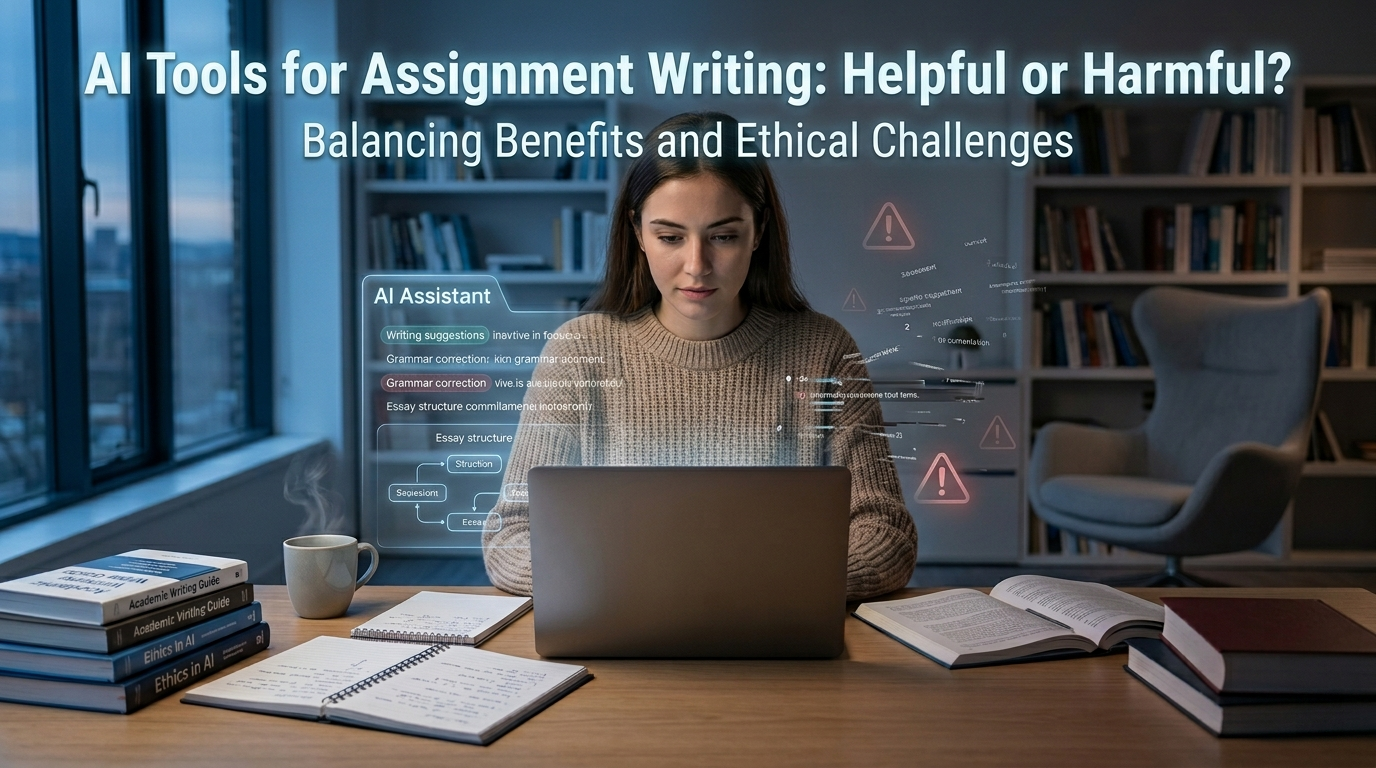
AI tools for assignment writing are neither completely helpful nor entirely harmful. Their impact depends on how students choose to use them.
When used responsibly, AI can improve productivity, support learning, enhance writing quality, and reduce academic stress. It can help students organize ideas, correct grammar mistakes, and manage time more effectively.
However, relying too heavily on AI can damage critical thinking skills, increase the risk of academic misconduct, and reduce genuine learning. Students who use AI to avoid effort rather than support their education may face long-term academic and professional disadvantages.
The key is balance. AI should act as a study assistant, not a replacement for independent thinking and academic integrity. Students who combine AI tools with proper research, originality, and critical analysis will gain the greatest benefits while avoiding the potential risks.
As technology continues evolving, understanding how to use AI ethically and intelligently will become one of the most valuable skills for university students in 2026 and beyond.

